Reviewing Jingle All the Way Retro Wavy Svg
As a designer who spends more time staring at stitch simulations than actual thread spools, I have learned to be skeptical of trendy digital assets. We see thousands of files pass through our inboxes every holiday season, but few manage to balance nostalgia with technical viability. When I first opened the Jingle All the Way Retro Wavy Svg, my initial reaction was not just about the aesthetic appeal, but about its potential translation into a tangible, stitched reality. This is not merely a graphic for a screen; it is a blueprint for a physical product that needs to withstand washing, wearing, and the critical eye of a paying customer.
The Aesthetic First Impression
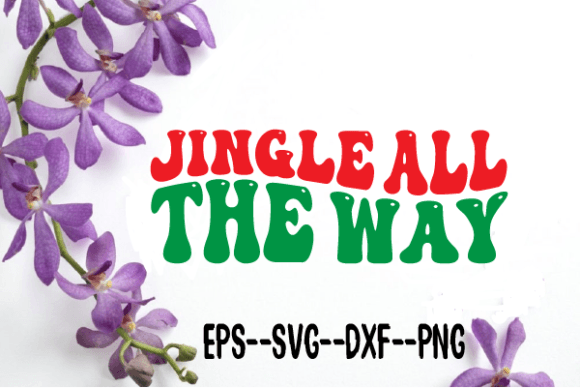
The design immediately strikes a chord with the current resurgence of seventies-inspired typography. The wavy baseline gives it a playful, fluid motion that feels organic rather than rigid. For an embroidery designer, this curvature is both a blessing and a challenge. It creates a mood that is warm, inviting, and distinctly festive without relying on the overused imagery of snowflakes or Santa Claus. The visual personality suggests a boutique feel, perfect for brands that want to appear approachable yet polished. However, seeing it as a vector on a white background is very different from imagining it punched out in thread on a textured fabric. The key question is always: will those smooth curves maintain their integrity when converted into a series of discrete stitches?
Real-World Application: The Holiday Tote Scenario
To truly evaluate this asset, I mentally placed it into a recent project context: a custom order for a local boutique’s holiday gift-with-purchase campaign. The client wanted a durable cotton tote bag that felt special enough to keep, not just discard. Using Jingle All the Way Retro Wavy Svg here makes sense. The bold, retro lettering stands out well against natural canvas, providing high contrast and readability.
In this scenario, the design serves as the focal point. Because the text is integrated into a wave shape, it occupies a wide horizontal space. This works beautifully on a tote bag where you have ample room. However, if I were adapting this for a smaller item, like a baby onesie or a pocket-sized embroidered patch, I would need to be cautious. The width-to-height ratio means it might dominate a small hoop size, leaving little room for breathing space or additional decorative elements. For a sweatshirt embroidery project, placing this across the chest could look striking, but it requires precise centering to ensure the wave aligns with the garment’s natural drape.
Technical Considerations for Stitching
When we move from concept to execution, the file format matters. The product description notes that you receive DXF, EPS, and SVG files. For those of us working strictly in machine embroidery software, it is important to note that these are primarily vector graphics formats, not native embroidery files like PES or DST. This means you will need to digitize the design yourself or use auto-digitizing features with caution.
If you are digitizing this manually, pay close attention to the stitch density. The thick, retro-style letters likely require a fill stitch to achieve solid coverage. However, because the letters are connected by the wavy baseline, you must ensure there are no overly long jumps or fragile connections that could snag. A satin stitch might work for thinner parts of the wave, but for the main body of the text, a tatami fill with proper underlay is essential to prevent puckering, especially on stretchy fabrics like jersey knits used in t-shirts.
Another critical factor is the stabilizer choice. Given the potentially dense nature of retro typography, a cut-away stabilizer is often safer for garments that will be washed frequently, while a tear-away might suffice for stable home decor items like pillow covers or tea towels. Always test on scrap fabric first. What looks crisp on screen can become a muddy mess if the thread colors do not have enough contrast against the fabric texture.
Navigating Fabric and Surface Challenges
Not all surfaces are created equal. While this design shines on flat, stable materials like canvas totes or denim jackets, it requires careful handling on curved surfaces. Applying Jingle All the Way Retro Wavy Svg to a cap, for instance, demands a 3D puff foam or very precise hooping to prevent distortion. The wavy nature of the text could easily look uneven if the fabric shifts during stitching.
Furthermore, consider the background. On dark fabrics, you may need to adjust your thread colors significantly or add a white underlay to ensure the vibrancy of the design pops. For sublimation projects, as mentioned in the product description for mugs and pillows, the vector clarity of the SVG and EPS files ensures that the edges remain sharp regardless of scaling. But for embroidery, remember that thread has thickness. Tiny details can get lost, so if you scale the design down too far, the legibility of "Jingle All the Way" might suffer.
Commercial Viability and Brand Value
For Etsy sellers and small shop owners, the value of a design lies in its versatility and market appeal. This particular graphic fits seamlessly into the "modern farmhouse" or "retro chic" niches that continue to perform well in the handmade marketplace. It feels less like a generic clipart and more like a custom design asset that elevates the perceived value of the finished product.
When customers see a well-executed version of this design on a high-quality hoodie or a structured tote, it signals professionalism. It suggests that the maker understands current trends and has the technical skill to execute them cleanly. This builds trust. However, always verify the licensing terms before selling. While the file is provided for creating products like t-shirts and mugs, commercial rights for digital resale of the file itself are typically restricted. Ensure you are selling the physical embroidered item, not the digital file, unless explicitly permitted.
Final Designer Notes
Before committing to a large production run, take these practical steps:
- Test Stitch Out: Always run a test on the actual fabric you plan to use. Check for puckering and thread breaks.
- Check Contrast: View your design in black and white to ensure the shapes are distinct and readable without color reliance.
- Hoop Size Awareness: Confirm that your machine’s hoop can accommodate the full width of the wave without repositioning, which can cause alignment issues.
- Thread Selection: Use high-quality polyester or rayon threads to maintain the sheen and durability required for holiday gifts that may be cherished for years.
In conclusion, Jingle All the Way Retro Wavy Svg is a strong contender for your holiday catalog. It offers a fresh take on seasonal messaging, moving away from clichés toward a stylish, retro vibe. With careful digitization and attention to fabric choice, it can become a standout piece in your collection of custom apparel and home goods. It is not just a graphic; it is an opportunity to create something memorable, tactile, and beautifully crafted.