Veterinarian New Wavy Retro Svg: A Designer’s Review
As an embroidery designer who spends more time staring at stitch maps than actual thread, I have learned to be skeptical of digital assets that promise versatility without delivering structural integrity. When I first pulled up the Veterinarian New Wavy Retro Svg, my initial reaction was not about the cuteness of the veterinary theme, but rather the complexity of the wavy retro aesthetic. In the world of machine embroidery, "retro" often translates to dense fill stitches and tricky curves that can puckers fabric if not handled correctly. However, looking at this as a potential asset for my craft business, I saw immediate opportunity mixed with necessary caution.
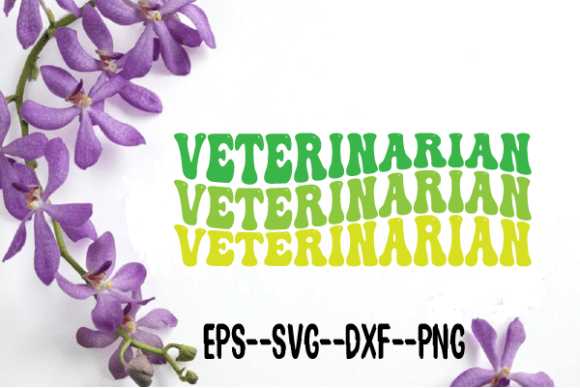
The design carries a distinct mid-century modern vibe, characterized by fluid lines and a playful yet professional demeanor suitable for veterinary professionals. For those of us creating handmade products for Etsy sellers or small shop owners, the visual personality of this graphic is strong. It does not scream; it whispers competence with a touch of nostalgia. This makes it an excellent candidate for personalized gifts, particularly for vet techs, clinic owners, or animal lovers who appreciate a subtler approach to their profession’s branding.
Real-World Application: The Tote Bag Test
To truly evaluate any design, you must imagine it stitched out. I recently worked on a custom order for a local veterinary clinic wanting branded merchandise for their staff appreciation week. The request was simple: durable, stylish, and identifiable. I considered using the Veterinarian New Wavy Retro Svg on a heavy canvas tote bag. This is a classic embroidered patch scenario where durability meets aesthetics.
The wavy nature of the retro style presents a unique challenge on textured fabrics like canvas. If the stitch density is too high, the fabric will pull and distort. If it is too low, the background fabric will show through, ruining the crispness of the retro lines. In my mental simulation of this project, I realized that this design would thrive best with a sturdy cut-away stabilizer. The curves require support to maintain their shape after multiple washes. For a sweatshirt embroidery project, the same logic applies, though a tear-away might suffice if the fleece is thick enough to support the weight of the thread.
Navigating Fabric and Hoop Constraints
One of the most critical aspects of reviewing a digital embroidery file is understanding where it fails. While the Veterinarian New Wavy Retro Svg is visually appealing, it requires careful placement. I would hesitate to use this on thin, stretchy fabrics like lightweight jersey t-shirts without significant stabilization. The wavy lines could easily warp during stitching, leading to a finished product that looks amateurish rather than professional.
Furthermore, hoop size is a major consideration. If you are working with a 4x4 inch hoop, you may need to scale the design down significantly. This brings us to the issue of detail loss. Small details in retro designs often rely on precise satin stitch borders. When scaled down, these borders can become too dense, causing thread breaks or needle deflection. I always advise testing the design on scrap fabric first, specifically checking how the smaller elements hold up at reduced sizes. For baby embroidery items, such as onesies, I would recommend enlarging the design slightly to ensure the stitches are robust enough to withstand frequent laundering.
Commercial Viability and Brand Consistency
For creative entrepreneurs and digital product sellers, the value of a design lies in its versatility. This graphic fits seamlessly into the Crafts and Graphics categories, offering a bridge between digital sublimation and physical embroidery. Although the product description mentions DXF and EPS files, which are typically used for cutting machines or vector graphics, the principles of design transfer remain relevant. If you are converting this for machine embroidery, you must pay close attention to the conversion process.
A poorly digitized version of this wavy retro style could result in excessive jump stitches or inefficient thread paths. As an experienced reviewer, I look for clean line work that translates well into running stitch outlines and balanced fill stitch areas. The retro aesthetic relies on negative space as much as positive space. Ensuring that the thread colors contrast appropriately with the fabric texture is vital. For example, using a muted teal or mustard yellow thread on a navy blue apron would highlight the retro vibe while maintaining readability.
Practical Notes for the Embroidery Designer
Before committing to a large batch of custom apparel or holiday embroidery gifts, consider these practical steps:
- Test on Scrap Fabric: Always run a test stitch on the same type of fabric you intend to use for the final product. This reveals issues with tension and density.
- Check Thread Color Contrast: Retro designs often use specific palettes. Ensure your thread colors pop against the background without clashing.
- Review Stitch Density: High density can cause puckering, especially on curved surfaces like caps or hats. Adjust density settings if your software allows.
- Confirm Hoop Size: Ensure the design fits comfortably within your hoop, leaving enough margin for stabilization.
- Inspect Small Details: Zoom in on the digital file to check for tiny elements that may not stitch out cleanly.
- Use Proper Stabilizer: Match the stabilizer to the fabric weight. Heavy fabrics need less support; light fabrics need more.
- Verify Licensing: Since this is a digital asset, confirm whether the license allows for commercial use of finished items. This is crucial for Etsy sellers and small business owners.
Final Thoughts on Visual Appeal and Value
The Veterinarian New Wavy Retro Svg offers a fresh take on professional themed designs. It moves away from the cliché paw prints and stethoscopes, offering a more sophisticated visual narrative. For boutique branding, this level of design sophistication can increase perceived value. Customers are increasingly drawn to items that feel curated and unique. A well-executed embroidered pillow cover or kitchen towel featuring this design can serve as a standout item in a craft fair or online store.
However, the success of this design depends entirely on execution. It is not a plug-and-play solution for every fabric type. It demands respect for the materials and the machine. By taking the time to understand the interplay between the wavy retro lines and the physical constraints of embroidery, you can create a finished product that not only looks good but lasts. Whether you are making a personalized gift for a friend in the veterinary field or stocking your small shop with unique merchandise, this design has the potential to elevate your offerings if handled with care and precision.
In the end, the best embroidery projects are those where the design and the medium work in harmony. This graphic provides a strong foundation, but it is your skill as a maker that will bring it to life. Keep your needles sharp, your tension balanced, and your creative vision clear.